
Playing The Right Game
Magnus Lomax was on the path to becoming a diplomat. Three years later, he’s on stage in Hamburg singing to mermaids in three different languages.

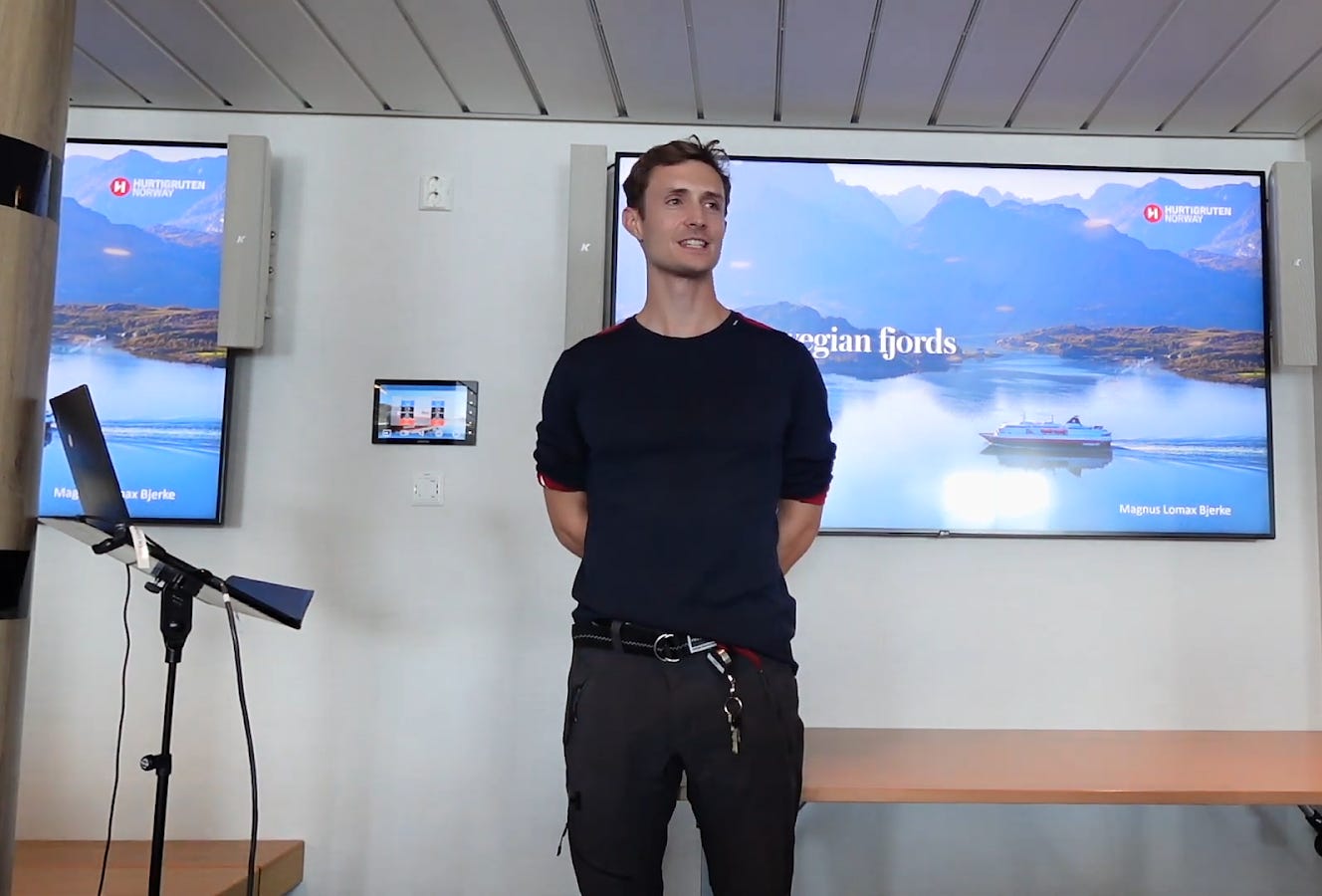
Two weeks before Magnus Lomax Bjerke was supposed to start his career as a Norwegian diplomat, he got a phone call: “Your security clearance has been denied.”
Magnus was stunned. He’d spent years preparing: A bachelor’s degree studying Chinese in Taiwan, five months at the Norwegian Consulate in Shanghai, a master’s thesis, then work as a research assistant at the Norwegian Foreign Policy Institute. Everything pointed toward the diplomatic training program.
But the denial was final. Too many personal connections in China.
As the news sank in, Magnus had to reconsider everything. Diplomacy had promised a clear path with certainty and a life travelling the world. But it’s a game with established rules, protocols to follow, and lines you couldn’t cross. You represented a position, not yourself.
“I went from someone who said, hey, I’m a diplomat, to someone who said, I’m a dude with way too much student debt and a degree that doesn’t make sense. Everything I’d done the past few years had sort of made sense in light of that goal. And then as soon as that door was closed, I was pushed all the way back down again.”
He started writing to figure out what to do next and face the question he’d be avoiding:
What game was he actually trying to play?
Maybe the rejection wasn’t a setback. Maybe it was permission to chase uncertainty to step off the established path and discover something that didn’t exist yet.
The rejection hurt. But maybe it also freed him to find and play a game of his choice, by his rules.
The Paralysis
Since that call, Magnus found a new route to go international: language learning. He dove in headlong with the results to show. In recent years, he’s performed Chinese stand-up in Oslo, hosted a Chinese New Year gala, taught musical improv, and spent two and a half years learning German. It all felt connected and one idea kept recurring:
What if the playful spirit of improv was the key to learning?
But Magnus had been there before. Starting projects, making plans, and losing momentum. The ideas multiplied faster than he could act on them, and working on too many things at once was overwhelming.
“I view ideas as a plague that needs to be exorcised. You don’t have much say in what things grab your interest. You just have to say, okay, that seems to be what needs to be put out into the world. And maybe it’ll just die, but at least then you’ve gotten rid of it and can move on to something else.”
He needed a forcing mechanism.
Five Weeks
This September, Magnus was one of the seventy students joining the first cohort of Act Two.
“I’d been flirting around with joining some online programs but then just not done it. So I was curious, what does a cohort like this look like? Because to me an accountability and forcing mechanism is very important. You show up, you get a little bit of feedback for what you’re going to do next week. Also, just the idea of paying a little bit of money for something—you better start doing the thing.”
With five weeks and a clear deadline, his original plan was to write an essay series about using improv techniques for language learning.
“Unfortunately, the writing felt heavy and I felt an immediate sense of resistance. I needed more practical experience gathering other people together and doing this to actually write it properly.”
Act Two had four guest speakers and each of their ideas resonated differently to Magnus. Azul Wells talked about filming seven videos in one day. Anne-Laure Le Cunff discussed tiny experiments with clear exit ramps using fear as a compass.
“I like watching people who are just being authentic, not trying to polish everything. And if you’re not a bit afraid, it’s a sign you’re not playing on the edge and should probably aim higher next time.”
But the idea that landed hardest came from guest speaker Paul Millerd: ship, quit, and learn.
“When you start something, you think oh, this is what I’m doing now and I have to continue it to the end. But you need to give yourself an exit to be nice to yourself. That makes it easier to have fun with the process”
Magnus was about to travel to Germany in the final weeks of Act Two. He’d been learning German for two and a half years and made the decision to pivot from essays.
In his Week four update, he wrote:
“I overrated my own work-capacity while travelling, so won’t be able to hit my initial goals. But things are still going well! I decided to post a short video every day, documenting my ‘Tour de Deutschland’ improv project.”
He thought getting on stage would be difficult.
But it was much easier than he’d expected.
The First Show
Magnus sent a message to a friend, asking if he could join an improv workshop in Germany. His friend made some calls, and a few days later, he got an email from Steife Brise, one of the biggest improv theaters in Germany.
They had three shows for him, the final being a full improvised musical.
“That was way more than what I was expecting. At one point, I was afraid they hadn’t gotten the memo that my German wasn’t great. So after speaking with the organizers on the phone, I told him, ‘you guys can still disinvite me if you want to.’”
They didn’t, and Magnus said yes.
His first show was in Hamburg, set in an old ship docked in the harbor with sailor characters and stories from the seven seas.
“That entire day was so interesting. I couldn’t focus on anything else. My mind was just constantly on, thinking about all the possible scenarios.”
The thing he’d been obsessing about for years was now about to happen.
“If you need to focus on doing something, book yourself some time where you have to share something on stage. As nervous as I was, I felt that the bigger the character I play, the easier it is. If you lean into being a little bit weird instead, then not being able to speak the language properly becomes an asset. It becomes part of the character.”
At the start, the audience wondered who he was. Was his broken German just part of the act? But soon enough, they realized he was still learning and leaned into his playfulness.
Three Languages, One Song
The third show was the musical — the grand finale.
The theme: a treasure hunt adventure inspired by the anime One Piece. Four performers. An opening song. A few scenes to introduce the play. Then the audience chooses the main character.
Magnus knew what was coming.
“I knew right after the opening song I’m screwed. I’m going to be the main character.”
Everyone knew he was the visiting foreigner, and when they were asked to choose the hero, they shouted:
“GET THE FOREIGNER IN THERE!”
The spotlight was now on Magnus. And then came the mermaid scene.
He was alone on stage and spoke to the audience in the first row, casting them as mermaids.
They didn’t respond.
“I’m singing things in German. It’s kind of working, and I’m sort of discovering that it’s hard to rhyme... So I just sat down and I said to the audience, ‘of course, you don’t speak German, you just speak the mermaid language.’ Then I started singing to them in Norwegian, which of course, is the language of the mermaids.”
Mid-line, switching from Norwegian to German, the rhyme escaped him.
“For me, I’m into hitting the right rhymes. So I switched over to singing in English to rhyme the German line before.”
Norwegian opening. German line. English line.
It was pure play – the kind of improvisation that only works when you dare to lean into the absurdity. The audience saw someone making it up as he went along, following his energy, and trusting the moment.
“That felt like a failure. I thought I screwed up. Like, oh no, I did that as a cop out because I wasn’t able to do it in German.”
But the audience loved it and asked:
“That was genius. How did you even think of that?”
“Performing in a different language is almost a superpower. Your edge is so much closer. You can get there really quickly just by trying to formulate a sentence. And if you can do that with good humor, by bravely stepping up to that line, people will love you and be inspired.”

What’s Next
After the show, Magnus sat in a café in Hamburg reflecting on the last few weeks.
“I sort of answered my own questions with my actions. That idea of ‘is this possible? What will that experience feel like?’ And then being on the other side, I was just like, ‘damn, it was possible. I did just have that experience.’”
Act Two ended in early October. Since then, Magnus has tested ideas at an improv theater festival, made contacts with people who want to invite him to travel abroad, and booked a German show in Oslo around Christmas. There’s even a Chinese comedy show in the works too.
For Magnus, the key is booking events to create forcing mechanisms.
“When I get something booked, then I have a focus point. Deadlines are magic. I know what I need to do. Then I can think about what I learned, harvest it, share it, and move to the next step.”
The new Citizens of the Internet community provides ongoing accountability with weekly check-ins, a platform to share progress, and another way to keep shipping.
“I’m definitely someone who needs a bit of a self-imposed structure for creativity to blossom.”
What Game Are You Playing?
Three years after the phone call that changed his path, Magnus stood on stage in Hamburg singing to mermaids in three languages, and even had a rap battle. The door that closed wasn’t the one he shouldn’t have walked through anyway.
If he’d gotten security clearance, he’d probably be finishing his training course right now, stationed at an embassy somewhere.
“Going down that very established path, I’d probably have some regrets of omission, thinking what if I’d taken a chance doing something else. But I enjoy gathering up regrets of commission instead where I can say, ‘at least I tried it.’ The idea is to build up a stack of worthwhile failures with potential upside. And who knows where I’ll be if I keep playing the game for a few years.”
“You have to be willing to be the fool before you can become the master. It’s very powerful to practice playing the fool and to not identify so much with doing things perfectly. It’s hard to progress if you’re not willing to fail a bit, right?”
Magnus works as a multilingual lecturer on the Hurtigruten ships. He’s booking German improv shows in Oslo, creating videos, and building on his progress through the Citizens of the Internet community.
“I’m very excited about online communities as a way of just opening myself up to genuine feedback. Internet serendipity is great, especially if it can fuel something real. Do things on the ground like singing, dancing, and getting together with real people. Make sure that the real world is primary.”
His questions to you are those he can’t stop thinking about himself:
What game are you playing? Is it a means to an end? Are you playing on the edge?
And are you willing to find out what you’re truly capable of?
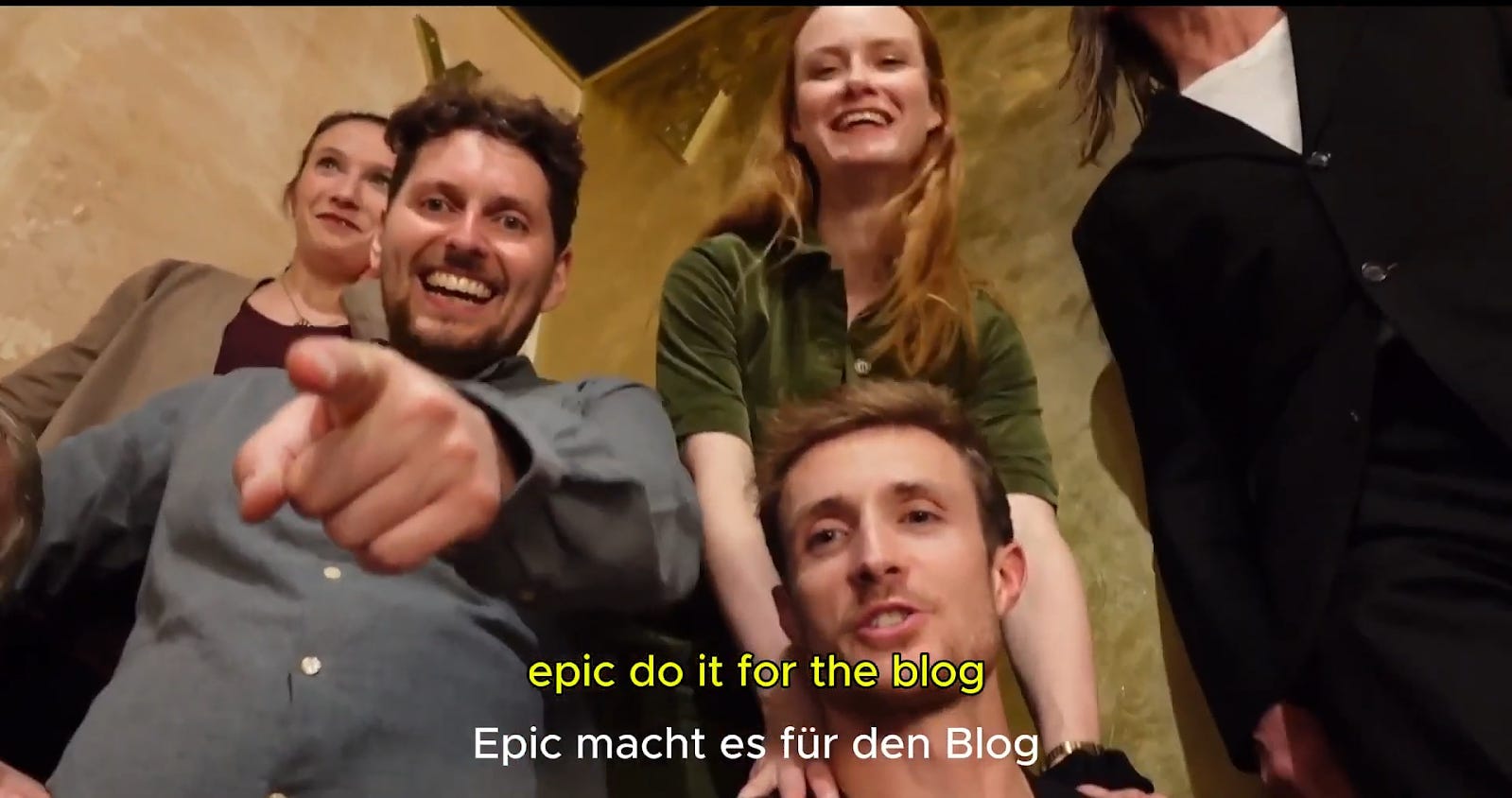
Magnus is working as a multilingual lecturer at Hurtigruten, booking shows for German improv in Oslo, and exploring how playful practice is the key to having the adventure of your life. You can follow his experiments on Substack, his YouTube channel, or connect through the Citizens of the Internet community.
If you’re stuck on a project you’ve been avoiding, you too might just need a forcing mechanism. Learn more here.
Loved this read. The part about ‘playing the right game’ hit home. Most people waste years optimizing for games they never even chose. The real shift happens when you start competing on your own terms.
Loved the read and that last line: are you really willing to find out what you are capable of? —wooah. Looking forward to living in that question with you Magnus. See you in Citizens. And diplomacy is who you are, not a title.